
Safety first
If you smell gas, don't troubleshoot. Leave the house and call your gas utility or 911 from outside. If your carbon monoxide alarm sounds, get everyone outside and call 911.
Check the thermostat
The most common cause is the simplest. If the fan is set to "on" instead of "auto," the blower runs all the time, including between heating cycles, so you feel room-temperature air that seems cold. Set the fan to auto, the mode to heat, and the temperature a few degrees above the room. Replace the batteries if the display is dim or blank.
A dirty filter can shut the burners off
When the filter is clogged, the furnace can't move enough air and starts to overheat. A safety switch then shuts off the burners while the blower keeps running, so you get cool air from the vents. Replace the filter and see if the problem clears.
Burners that light, then go out
If you hear the furnace light and then shut off after a few seconds, often several times before it gives up, a dirty flame sensor is a common cause. The sensor confirms there's a flame; when it's coated, the furnace thinks the flame failed and shuts the gas off for safety. Cleaning or replacing it is a routine repair.
No ignition at all
Most modern furnaces use a hot surface ignitor that glows to light the gas. Ignitors wear out and crack. If the blower and inducer motor run but you never see the glow or hear the burners light, the ignitor or the control board is a likely suspect.
From one of our jobs: a 20-year-old furnace that only needed one part
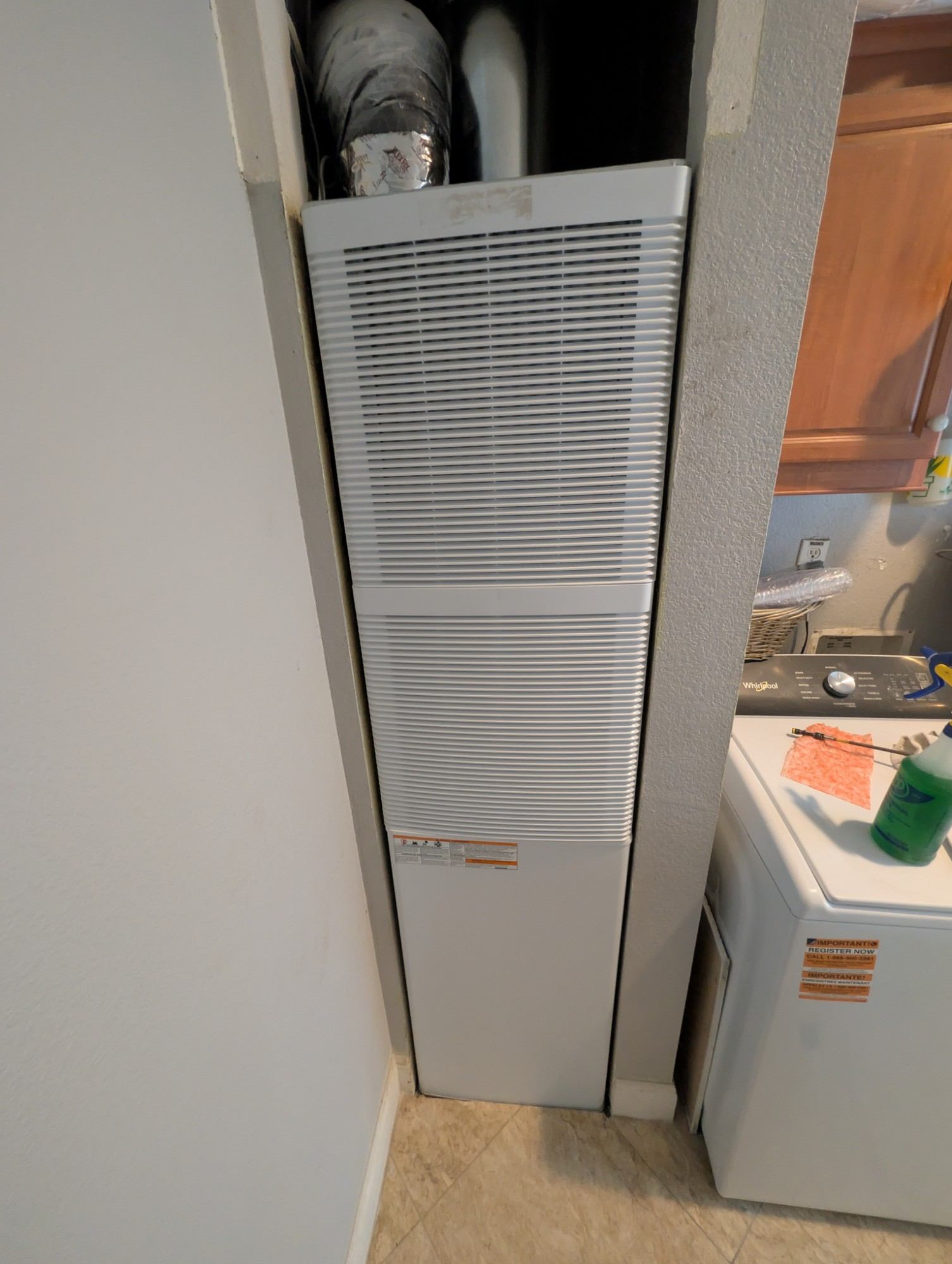
We got a no-heat call and found a furnace more than 20 years old that wasn't running at all. The cause was a bad limit switch. A limit switch is a safety device that shuts the furnace down if it gets too hot; this one had failed and was interrupting the low-voltage control signal, so the furnace never started.
Every other component was running strong with no signs of failing, so we told the homeowner the repair was the better option. Because of the furnace's age, we also suggested setting a budget aside for a replacement down the line.
High-efficiency furnaces have extra causes
Furnaces with white plastic vent pipes produce water as they run. If the condensate drain or trap clogs, or if leaves or a nest block the vent pipes outside, a pressure switch stops the furnace from lighting. Check that the pipes outside are clear.
What you can check yourself
- Thermostat: heat mode, fan on auto, setpoint above room temperature, fresh batteries
- Filter: replace if dirty
- Furnace power switch: on (it often looks like a light switch near the furnace)
- Furnace door: closed and seated, because a safety switch stops the furnace if it's loose
- Breaker: on
- Gas: other gas appliances, like the stove, are working
- Vent pipes outside (high-efficiency furnaces): clear
Read the error code
Many furnaces have a small window in the lower door with a blinking light. The number of blinks is a code, and the chart is usually on a label inside the door. Note it before you call; it helps us arrive with the right parts.
When to call
If those checks don't fix it, or the furnace keeps shutting down, call us. Repeated lockouts, burning smells or unusual noises shouldn't be ignored. We answer 24/7, and online booking is available for weekday visits.
