
The short answer
Repair it if the system is in reasonable shape and the problem is a common part. Look hard at replacement if it's older, needs a major component, uses R-22 refrigerant, or has been breaking down every summer. The rest of this guide explains how to tell which situation you're in.
Start with what actually failed
Not all repairs are equal. Some parts wear out on every air conditioner and are routine to replace:
- Capacitors, which help the motors start
- Contactors, the switch that turns the outdoor unit on
- Fan motors
- Clogged condensate drains
- Thermostat and wiring problems
Fixing one of these on a healthy system is almost always worth it. The bigger decisions come with compressor failures and refrigerant leaks in the coils, because those repairs cost a large share of a new system.
How old is it?
Many central air conditioners last somewhere around 12 to 20 years. Hot inland summers, like those in Gilroy and Morgan Hill, put more hours on a system than the milder parts of the Bay Area. Regular maintenance and well-designed ductwork help a system reach the long end of that range.
You can usually find the manufacture date on the label of the outdoor unit, or we can read it from the serial number.
What refrigerant does it use?
If your system uses R-22, sometimes called Freon, production and import of it ended in the US in 2020. What's left is recycled or stockpiled, so recharging an R-22 system is expensive, and a leak usually tips the decision toward replacement.
Systems that use R-410A can still be serviced. New equipment now uses newer refrigerants such as R-454B or R-32, but that alone isn't a reason to replace a healthy R-410A system.
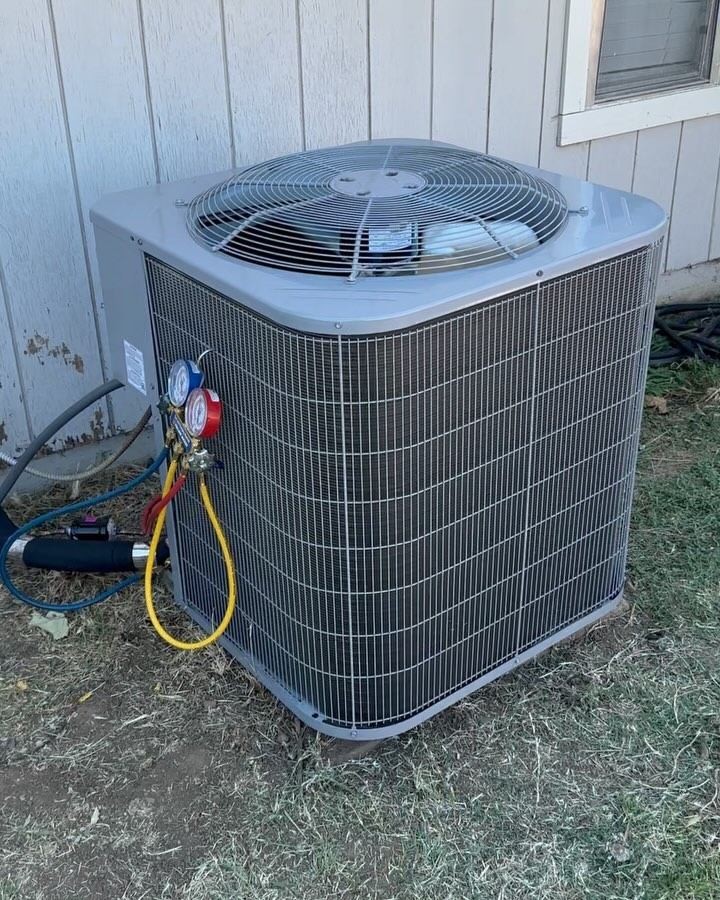
From one of our jobs: a capacitor, not a new system
We got a no-cooling call, and the diagnosis found a failed capacitor. Without a working capacitor, the compressor couldn't start, so the system couldn't cool.
Replacing the capacitor fixed it. Nothing else needed attention, so a repair was the right answer, not a new air conditioner.
A rule of thumb
A common rule: multiply the system's age by the repair cost. If the result is more than about $5,000, replacement deserves a serious look. A 14-year-old system with a $500 repair comes to $7,000. It's only a starting point, but it helps put a repair quote in perspective.
Other signs it may be time
- Repairs most summers
- Rooms that never cool evenly, even after repairs
- Electric bills creeping up with no change in how you use it
- Loud operation or frequent short cycling
If you replace it
A replacement is a good time to fix what the old system never did well. Ask for sizing based on the house rather than the old unit, have the ducts checked, and consider a heat pump if your furnace is also older; a heat pump heats as well as cools. Make sure the quote includes the permit and tells you the labor warranty.
How we handle it
When a repair is borderline, we give you both numbers: what the repair costs and what replacement would cost. Then the decision is yours. Repair visits have a diagnostic fee that's credited toward the repair if you go ahead, and quotes for new systems are free.
