
Start by measuring
Before changing anything, check the temperature in each room at the same time of day for a few days. Note when it's worst: afternoons, nights or all day. A room that's only hot at 4 pm points to sun; a room that's always off points to air delivery.
Ducts that don't deliver
The most common cause is a duct problem. Flexible ducts in attics get crushed, kinked or disconnected. Joints leak. Rooms at the end of long runs get less air, especially if the ducts were undersized to begin with. When the system runs, hold your hand at each vent: weak airflow in the problem room is a strong clue.
Air has to get back out
Air that goes into a room has to return to the system. Many homes have one central return, so when a bedroom door is closed, air can't get back easily and that room gets less airflow. Signs include doors that whistle, slam or are hard to close when the system runs. A jumper duct or transfer grille can fix this without adding a full return.
From one of our jobs: the new system wasn't the problem
A homeowner called us about a brand-new system that another company had installed. They'd had trouble getting issues corrected and assumed something was wrong with the new equipment.
The equipment was fine. The return air was in a poor location and too small, so the system couldn't pull enough air back to work properly. The fix was adding another return in a common area.
A properly sized return in a central, open part of the house can pull air in from every part of the home. That's essential for heating and cooling a house effectively, and no amount of new equipment makes up for it.
Upstairs heat
Heat rises, and upstairs rooms sit under an attic that can get very hot in summer. They also tend to have the longest duct runs. Attic insulation, better return air upstairs, duct improvements and zoning all help. A bigger air conditioner usually doesn't: it cools the downstairs faster and shuts off before the upstairs catches up.
Sun and windows
West-facing rooms with large windows can gain a lot of heat in the afternoon. Shades, window film or exterior shading are often cheaper fixes than HVAC changes.
Don't close vents in other rooms
It seems logical to close vents in rooms you don't use to push air elsewhere, but it usually doesn't work. It raises pressure in the ducts, can increase duct leakage and noise, and can strain the blower. Keep vents open and fix the actual cause.
What fixes it
- Duct repair and sealing for crushed, disconnected or leaky runs
- Balancing dampers to adjust airflow between rooms
- Return air paths for closed-door rooms
- Zoning for two-story homes and large additions
- A ductless mini-split for one room the system can't reach
- Attic insulation and shading for heat gain
How we approach it
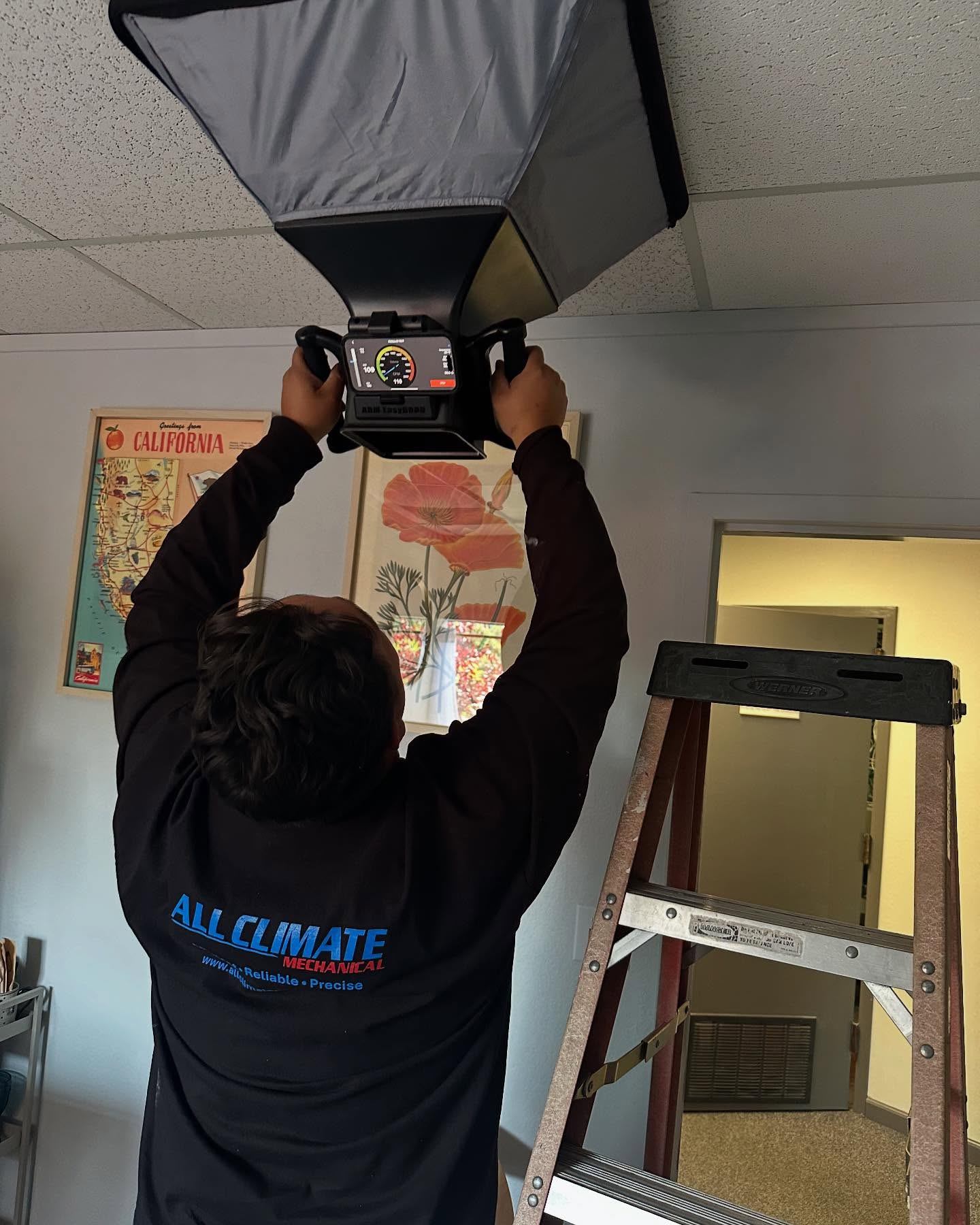
We measure airflow at the vents, look at the duct layout and the return path, and ask about when the problem happens. Then we recommend the least expensive fix that actually solves it, which is often duct work rather than new equipment.
